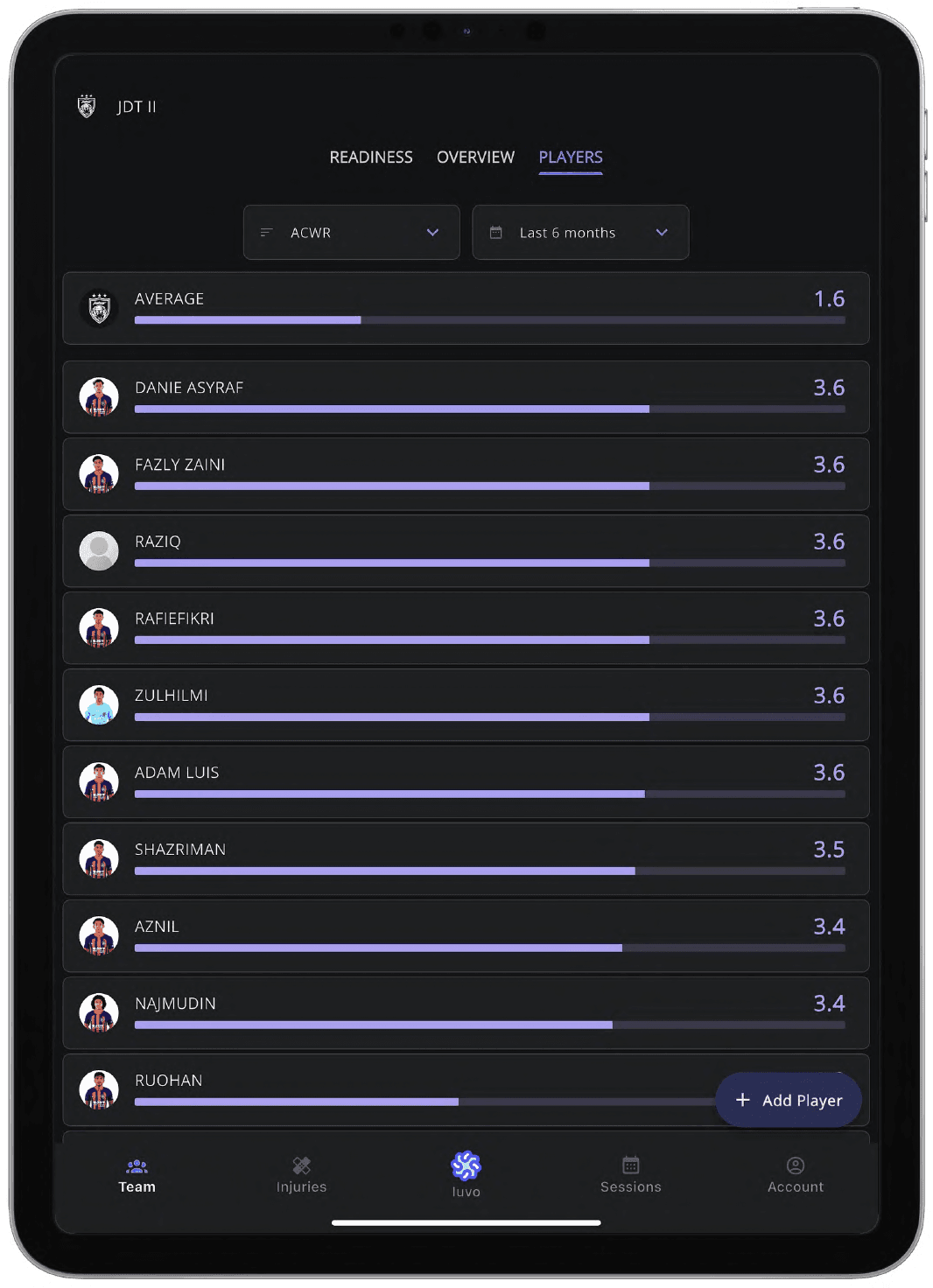
Rank the squad by any metric
ACWR, pain, fatigue or intensity, over any period. The player who needs a conversation is at the top.
Ahead of injuries

Nico Valtierra
1m agoReported pain in the Thigh
Players check in from their own phone in about 30 seconds: sleep, soreness, stress, and where it hurts. Your medical, performance and coaching staff see the same alert before the session, not after the scan.
Monday 12 October
08:14
Nico Valtierra
1m agoReported pain in the Thigh
Ilyas Benali
4m agoSoreness above typical range. 7‑day average up 45%.
Teo Lindqvist
7m agoReported pain in the Ankle/foot
The problem
Saturday
78′
The winger feels something late in the match, plays on, and tells no one.
Monday
08:40
The GPS report is in one. The physio’s notes are in another.
Monday
10:00
Nobody has the full picture, so the session goes ahead as planned.
Monday
10:20
You find out twenty minutes into the session.
86%
Across 11 seasons of the UEFA Champions League injury study, players were available for 86% of matches, and teams with higher availability finished higher in their league.
Try it
What your staff see
08:13

Nico Valtierra
Winger · sample player
22 more players checked in, no flags
Sent to medical, performance and coaching
Sample data for illustration. In IUVO, every answer is compared with that player’s own typical range.
Before
With IUVO
BeforeYou hear about pain when the player pulls up.
With IUVOPain reports reach every staff phone the moment the player checks in.
BeforeReports take hours, and one expert to read them.
With IUVOIUVO writes the trend in plain words: “7-day soreness up 45%.”
BeforeEach department keeps its own spreadsheet.
With IUVOMedical, performance and coaching share one view of every player.
See the full staff app on a 30-minute call.
Book my demo(opens the booking calendar)How it works
Step 01
Before the session: sleep, soreness, stress, and any pain, marked on a body map. After it: how hard it felt. It’s a link on their phone, so there is no app to install.
Where does it hurt?
Tap anywhere on the body to try it.
Step 02
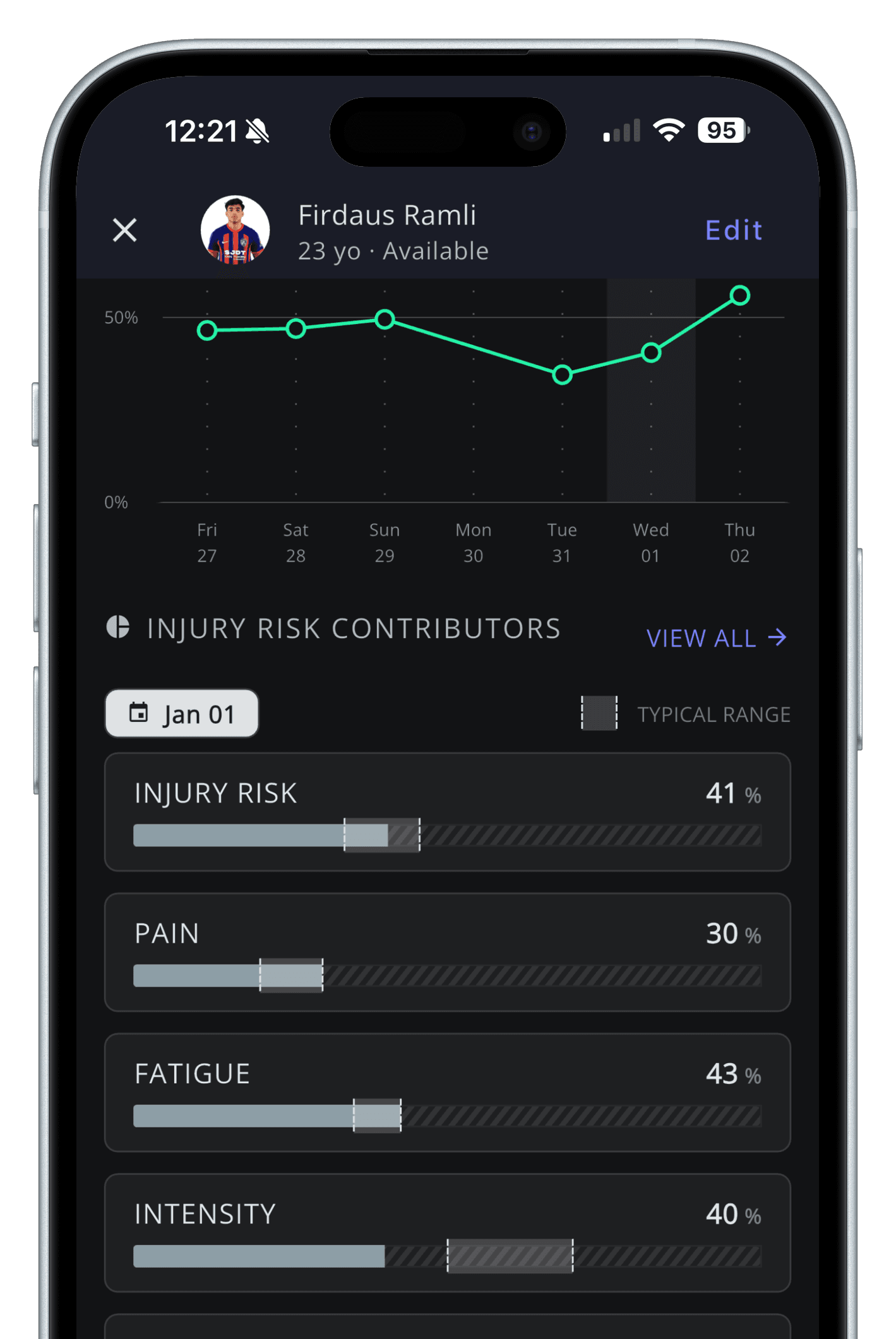
Every answer is compared with that player’s typical range. Abnormal trends and the factors behind injury risk come back in plain words, not raw tables.
Step 03
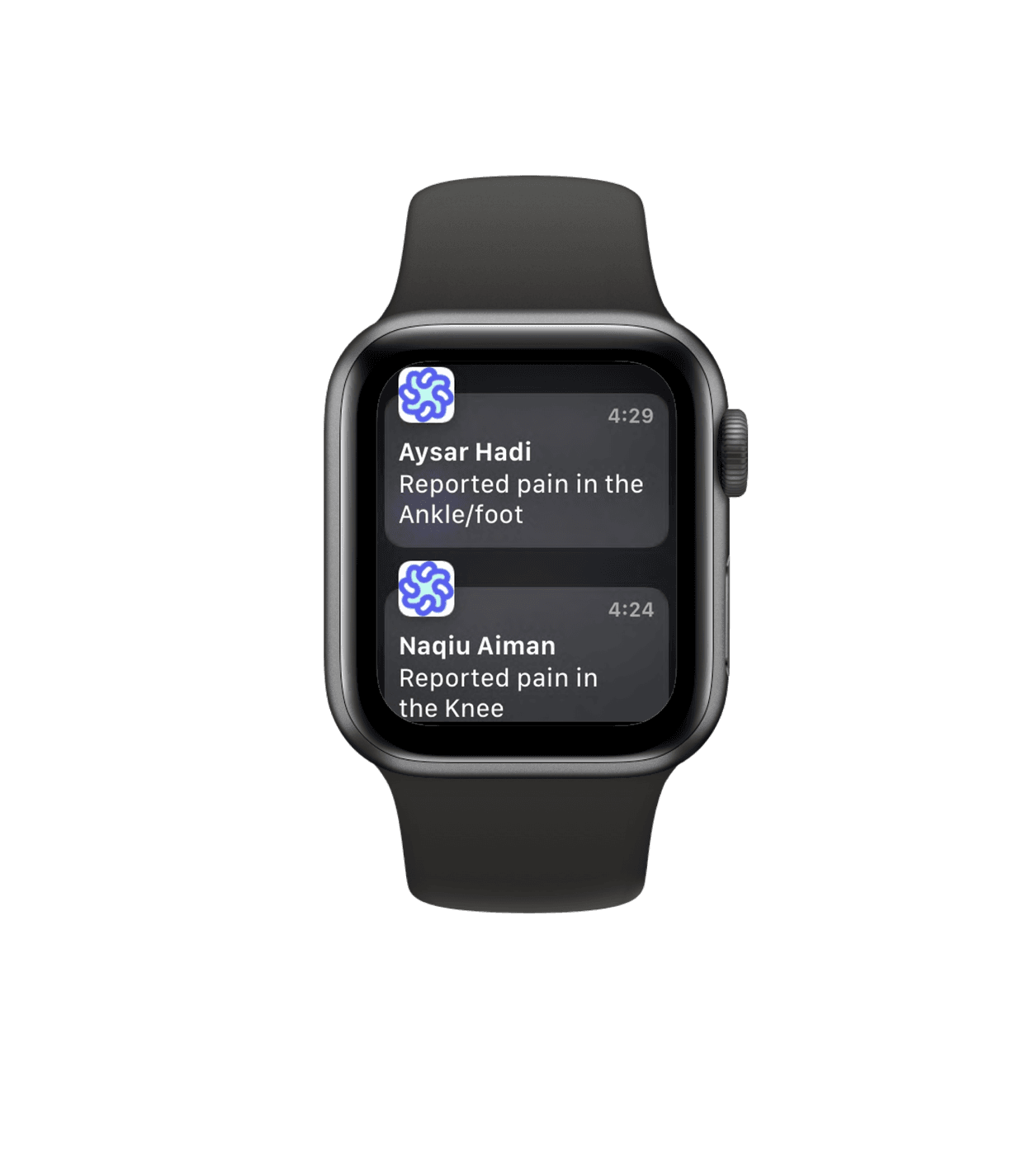
Medical, performance and coaching get the same flags on iPhone, iPad and Apple Watch. Nobody forwards a report, and nobody keeps a separate spreadsheet.
No hardware to buy. We set it up for your squad in a few hours.
Book my demo(opens the booking calendar)Squad view
ACWR, pain, fatigue or intensity, over any period. The player who needs a conversation is at the top.
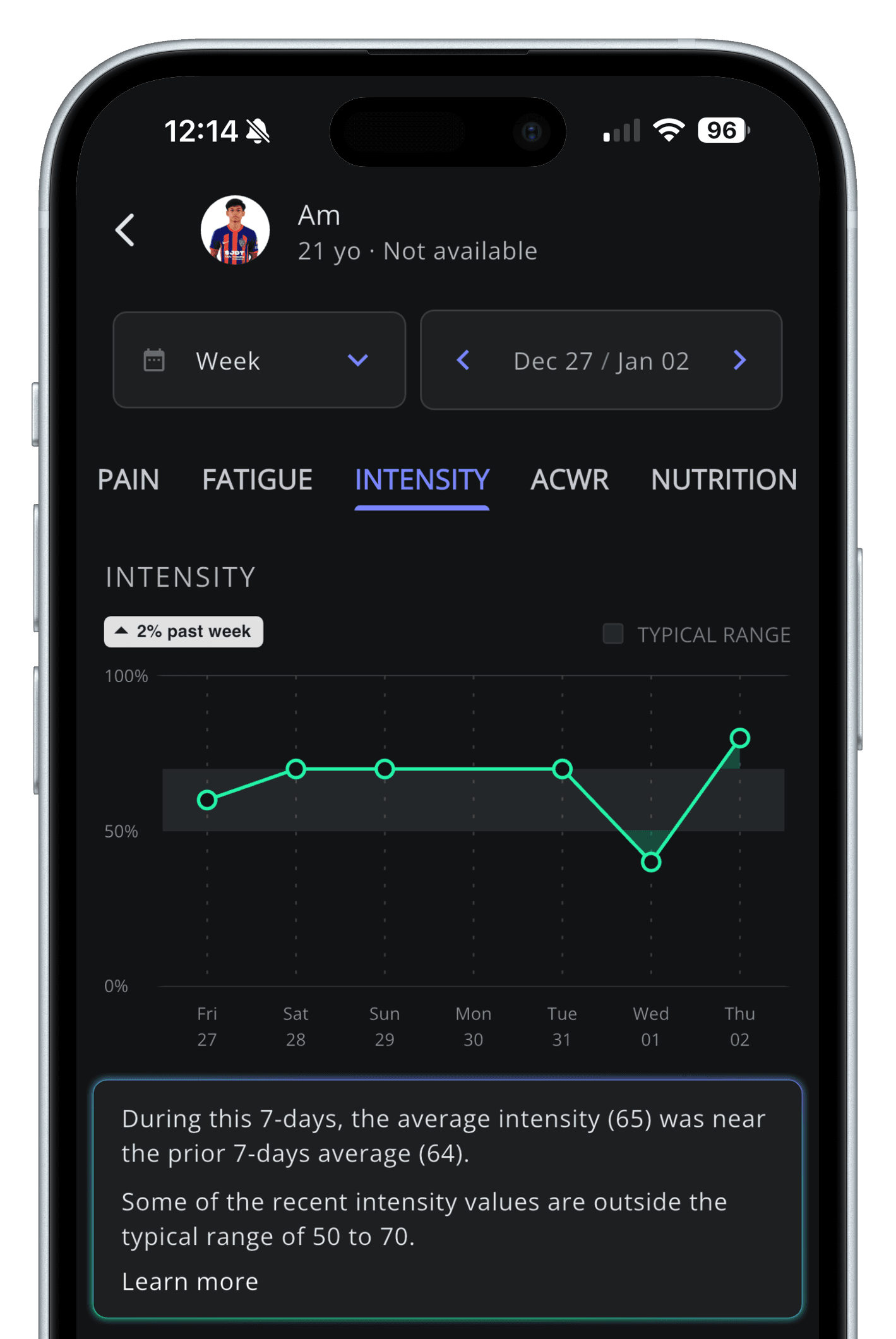
Each chart shades the player's typical range and explains the trend in a sentence.
See what pushed a player's risk up: pain, fatigue, intensity or recent injuries.
Sample player · this week
Medium riskEvidence
Injuries and results
“Injuries had a significant influence on performance in the league play and in European cups in male professional football.”
Communication and prevention
“The study also shows possibilities to improve the prevention process and communication between players, coaches, doctors, and physiotherapists.”
Get started
01
A call with your staff. Bring your questions and your current workflow.
02
Our team sets IUVO up for your squad and walks everyone through the fundamentals.
03
Use IUVO with your squad for 30 days. If it isn't working for your staff, you get your money back.
04
We handle technical support while you focus on the next match.
Be the staff that saw it coming. In 30 minutes we’ll show you the check-in, the alerts, and what your staff would see before their next session.
30-day money-back guarantee · Onboarding included · No wearables needed
Need your head coach on board? Send them this page
30-day money-back guarantee